
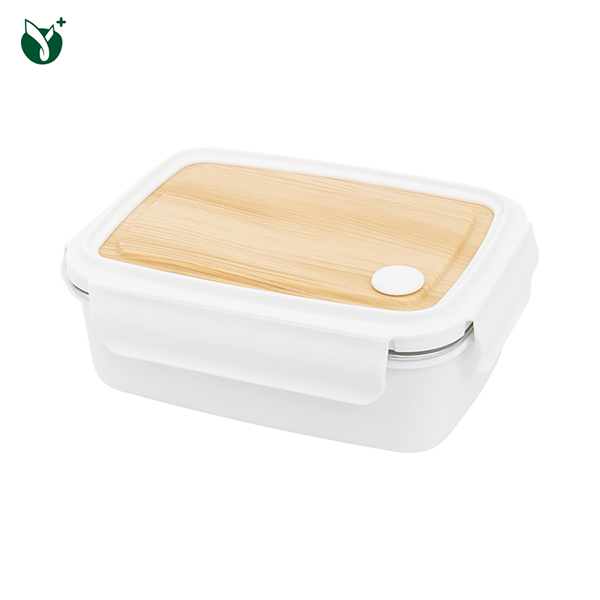
In recent years, global awareness regarding environmental sustainability has grown exponentially, with increasing demand for eco-friendly alternatives to conventional plastic products. Responding to this need, a pioneering new **Food Container Lunch Box**—crafted entirely from biodegradable materials—has entered the market, promising to revolutionize the way consumers think about everyday food storage and environmental impact.
This innovative product is the result of concerted efforts by a dedicated research and development team renowned for its expertise in biodegradable materials. Leveraging years of experience and a commitment to sustainability, the R&D team has collaborated closely with the School of Materials Science and Chemical Engineering at Ningbo University, a prestigious institution known for its cutting-edge research in material sciences. This partnership has enabled the successful creation of a lunch box that not only meets the demands of modern consumers for durability and convenience but also addresses one of the most pressing environmental challenges of our time—plastic pollution.
### A Leap Forward in Biodegradable Material Technology
The core of the Food Container Lunch Box’s innovation lies in its biodegradable composition. Unlike traditional food containers that rely heavily on non-degradable plastics, which persist in the environment for hundreds of years, this lunch box decomposes naturally within a significantly shorter time frame after disposal. This is made possible through advanced materials developed through the joint research efforts of the company’s R&D team and Ningbo University.
By integrating biodegradable polymers derived from renewable resources with modern manufacturing techniques, the team has succeeded in creating a product that exhibits excellent durability, heat resistance, and leak-proof capabilities. Moreover, its biodegradable properties mean it can be composted in industrial facilities or even some home compost setups, reducing landfill accumulation and harmful environmental footprint.
### The Role of Research and Development Expertise
The driving force behind this breakthrough is the R&D team’s deep knowledge and hands-on experience in biodegradable materials. With several years spent exploring novel bio-based polymers and sustainable production methodologies, the team has been able to overcome common challenges such as material strength, shelf-life stability, and cost-effectiveness which often impede the broader adoption of environmentally friendly products.
Their collaborative engagement with Ningbo University’s School of Materials Science and Chemical Engineering has provided critical academic insights and technical resources, facilitating accelerated innovation cycles. Key benefits of this collaboration include access to state-of-the-art laboratories, theoretical material design models, and the expertise of university scholars who specialize in polymer chemistry and material degradation processes.
This synergy marks a significant milestone, effectively bridging academic research with practical industrial applications. It has paved the way for pioneering new standards in environmental-friendly materials, and is set to inspire future innovations in the biodegradable products sector.
### Meeting Consumer and Environmental Needs
Modern consumers are increasingly aware of the environmental impacts of their daily choices, and there’s a growing preference for products that align with sustainable lifestyles. The Food Container Lunch Box caters directly to this demand, offering a product that combines practicality with ecological responsibility.
Perfectly suited for office workers, students, and families, the lunch box provides a reliable, reusable, and sustainable alternative to disposable plastic containers and single-use packaging. Its robust design ensures easy cleaning and repeated usage, while still offering the option of environmentally safe disposal through biodegradation.
Beyond individual consumers, this product holds great promise for businesses seeking to lessen their environmental impact. Cafes, restaurants, and catering services can incorporate these biodegradable containers to fully embrace greener operations, enhancing their brand image and meeting the expectations of eco-conscious customers.
### Advancing a Global Movement Toward Sustainability
The development and launch of this biodegradable Food Container Lunch Box reflect a broader global movement focused on reducing plastic waste and promoting sustainability within material sciences. Governments worldwide are increasingly implementing stricter regulations on single-use plastics, incentivizing innovations like this that offer practical, scalable alternatives.
By spearheading advancements in biodegradable food containers, the company and its partners are contributing significantly to this positive momentum. Their work demonstrates how the combination of R&D expertise and academic collaboration can birth new technologies that meet both market demands and environmental imperatives.
### Looking Ahead
With its innovative design and sustainable composition, the Food Container Lunch Box sets a new benchmark for eco-friendly food storage solutions. The company plans to continue investing in research and development, driven by a firm commitment to environmental responsibility. Future projects aim to expand the range of biodegradable products available to consumers and businesses alike, incorporating even more advanced materials and improved functional features.
Furthermore, continued collaboration with academic institutions like Ningbo University will remain a cornerstone of their strategy, ensuring access to cutting-edge scientific developments and fostering a culture of innovation and sustainability.
### Conclusion
In a world facing mounting environmental challenges, the introduction of the biodegradable Food Container Lunch Box represents a timely and meaningful advancement. It proves that sustainable materials can deliver high performance while protecting the planet, underscoring the profound impact of dedicated research and collaboration in addressing ecological concerns.
As consumer preferences shift toward greener choices, and regulatory frameworks evolve to support sustainable practices, products like this will not only become more prevalent but will also play a crucial role in building a cleaner, healthier future for generations to come. Through this initiative, a new era of environmental-friendly materials is truly unfolding—one that holds promise for a more sustainable, responsible, and innovative tomorrow.